











AUTOHOISTPRO BLOG - BUYING GUIDES
ALI certification is the gold standard for car lift safety, but many buyers don't understand what it means or why it matters – and that gap costs them in warranty claims, insurance coverage, and sometimes safety. Here's everything you need to know. AutoHoistPro carries ALI-certified models and ships every order with free freight from our 3 US hubs, so when you buy from us, just check the product listing or call us to confirm a specific model's certification. This guide explains what the Automotive Lift Institute is, how a lift earns (and keeps) ALI certification, why that certification protects a $3,000-$10,000 investment, and exactly how to verify a lift is genuinely certified before you spend a dollar. By the end you'll know what "ALI certified" really means, why it's the one spec you should never compromise on, and how to spot the gray-market lifts that fake their way past unwary buyers. If you remember one rule from this guide, make it this: if a lift isn't listed in the ALI database, it isn't certified – no matter what the listing says.
Table of Contents
What Is ALI Certification?
Definition
ALI stands for the Automotive Lift Institute, an independent, third-party certification organization established to ensure car lift safety and quality. It is the only organization accredited by ANSI (the American National Standards Institute) specifically for automotive lifts, which makes ALI certification the single recognized proof that a lift has been independently tested – not just that a manufacturer claims it meets a standard. That independence matters: a manufacturer can say its lift "meets ALI standards" all day, but only ALI's test and audit can prove it.
What ALI Does
ALI tests lifts to the ANSI/ALI ALCTV safety standard, conducts factory audits of manufacturers, performs random field inspections of installed lifts, provides safety training and operator resources, and maintains a public certification database anyone can search. The testing is independent: ALI doesn't build lifts, so it has no incentive to pass a marginal product. A certification that an ALI auditor can revoke at the next audit is worth far more than a brochure claim.
ALI vs Non-ALI Certified Lifts
| Factor | ALI-Certified | Non-ALI Certified |
|---|---|---|
| Independent testing | ✓ Verified | ✗ Self-claimed |
| Safety standard | ✓ ANSI/ALI ALCTV | ✗ May not meet it |
| Factory audits | ✓ Regular | ✗ None |
| Field inspections | ✓ Random | ✗ None |
| Warranty | ✓ Honored | ✗ May be void |
| Insurance coverage | ✓ Accepted | ✗ Often denied |
| Cost | +$200-$500 upfront | Lower initial cost |
A non-ALI lift saves $200-$500 up front and can cost thousands later in voided warranties, denied insurance claims, and – most importantly – a far higher risk of a failure that drops a vehicle. The table is the whole argument: the only column where non-certified wins is the first-week price, and it loses on everything that matters after that.
Why ALI Certification Matters
Safety
ALI-certified lifts undergo rigorous testing: structural integrity under 150% of rated capacity, cycle testing through 10,000+ lift/lower cycles, safety-lock engagement at every height, and electrical and hydraulic safety checks. Regular audits and field inspections keep manufacturers honest over time, not just on the day of the original test. The result is a measurably lower failure rate – certified lifts see dramatically fewer safety incidents than uncertified ones, which is the whole point. A lift is the one tool in your shop where a failure can kill someone, so the safety margin is the spec that protects everything else.
Warranty Protection
Most manufacturers require ALI certification for warranty coverage. A non-certified lift that fails may have its warranty voided on the grounds that it was never built to the certified spec, leaving you to eat the repair bill on a $3,000-$10,000 piece of equipment. ALI certification is your proof that the lift was made and installed correctly, which is exactly what a warranty claim will ask for. Without it, the first warranty call can turn into a finger-pointing match between you and the seller.
Insurance Coverage
Many business and homeowners policies require ALI-certified equipment. A non-certified lift involved in an incident – a dropped vehicle, property damage, an injury – may not be covered, and for a shop that can mean a claim denial large enough to close the business. Certification is also a liability shield: it shows you chose equipment that met the recognized safety standard, which matters the day something goes wrong and the adjuster starts asking questions.
Resale Value
ALI-certified lifts retain value far better than non-certified ones. They're easier to sell (proof of safety and quality is built in), professional buyers require certification, and you can typically recover 60-70% of original value versus 30-40% for a non-certified lift that buyers will treat as a gamble. A certified lift is a transferable asset; a non-certified lift is a question mark no used buyer wants to inherit.
Legal Compliance
Some states require ALI certification for commercial lift use, OSHA references ALI standards, and many building permits require certified equipment. Buying certified up front keeps you on the right side of inspectors and out of liability lawsuits, and it means a future sale or inspection of your shop won't hinge on a certification you don't have.
The ALI Certification Process
Step 1: Design Review
The manufacturer submits the lift's design to ALI, whose engineers review it for compliance with ANSI/ALI ALCTV. The design must meet every structural, safety, electrical, and hydraulic requirement before a single test unit is built. A lift can fail certification at the paper stage if the steel is undersized or the safety system is incomplete.
Step 2: Factory Audit
ALI auditors visit the manufacturing facility, inspect production processes and quality control, verify material specifications and welder certifications, and review testing protocols. A factory that can't demonstrate consistent quality doesn't get certified, no matter how good a single sample lift looks.
Step 3: Product Testing
An independent laboratory load-tests the lift to 150% of rated capacity, cycle-tests it through 10,000+ lift/lower cycles, and validates the safety systems and structural integrity. Fail any of these and the lift goes back for redesign – there's no partial credit for "almost" passing a structural test.
Step 4: Certification
If every requirement is met, the lift receives ALI certification, is listed in the ALI certification database, and the manufacturer may use the ALI mark. Certification is valid for a defined term, not forever.
Step 5: Ongoing Compliance
Annual factory audits, random field inspections, complaint investigation, and recertification on a rolling basis keep the certification current. A certified lift today stays certified only if the manufacturer keeps meeting the standard – a detail gray-market sellers conveniently leave out when they print a stale logo on a box.
How to Verify ALI Certification
Check the ALI Database
Visit autolift.org and search by manufacturer or model. Verify the current certification status and the expiration date. If a lift isn't in the database, it isn't certified – regardless of what the listing says. This single check takes two minutes and catches most fakes.
Look for the ALI Label
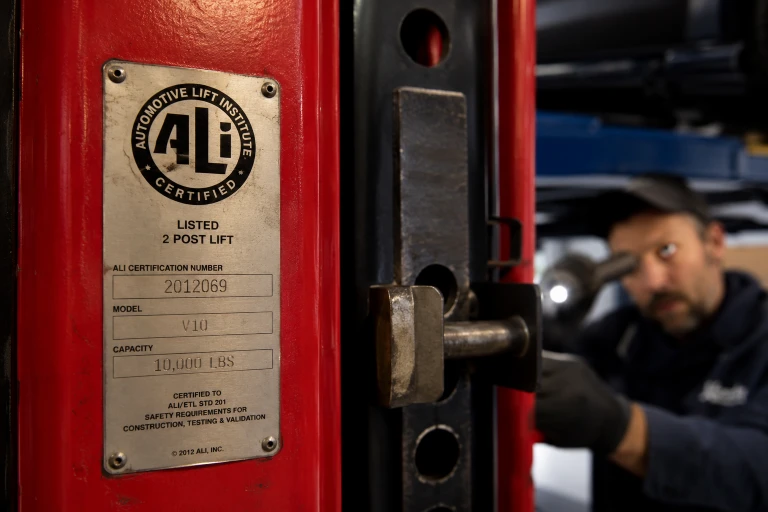
Certified lifts carry an ALI certification label on the column or frame, showing the model, serial number, and certification date. Cross-check it against the ALI database; the label and the database should agree. A label with no matching database entry is a red flag, not a certification.
Ask the Dealer
Reputable dealers – like AutoHoistPro – will tell you plainly whether a specific model is ALI-certified and will provide certification documentation on request. Verify before purchase, and don't accept "ALI pending" or "meets ALI standards" as a substitute for actual certification. Read more about our authorized-dealer standards on our about us page.
Red Flags
- ✗ Dealer can't provide certification proof
- ✗ Price significantly below market (often a non-certified import)
- ✗ "Import" or "gray market" lifts with no US parts support
- ✗ No ALI label on the lift
- ✗ Not listed in the ALI database
ALI Certification Requirements
Design Standards (ANSI/ALI ALCTV)
Structural integrity (steel thickness, weld quality), safety systems (locks, stops, emergency release), electrical safety (wiring, grounding, overload protection), hydraulic systems (hoses, fittings, pressure relief), and labeling (warnings, capacity, instructions). Every one of these is tested, not self-attested.
Manufacturing Standards
Quality control procedures, material traceability, welder certification, testing protocols, and documentation that lets ALI confirm each unit matches the certified design. A factory can't quietly swap thinner steel after certification without risking revocation at the next audit.
Installation Standards
Proper anchoring to a 4-inch-plus reinforced slab, electrical installation by a licensed electrician, level installation within ±1/8" over 10 feet, and 36" of safety clearance on all sides. Professional installation is recommended and often required to keep the warranty valid – a certified lift installed wrong is still a safety hazard.
Maintenance Standards
Monthly visual inspections, annual professional inspections, lubrication per the manufacturer schedule, cable and hose inspection, safety-system testing, and record keeping. Certification covers the design and manufacture; safe operation depends on you maintaining it, and a lapsed maintenance log can sink a warranty claim as fast as a lapsed certification.
ALI-Certified Lifts at AutoHoistPro
Our Commitment
Many of the lifts we sell are ALI/ALCTV certified – look for the certification on each product listing, or call us and we will confirm a specific model. We favor manufacturers that build to recognized safety standards, and we flag certification status clearly on every listing so you never have to guess.
Why We Only Sell ALI-Certified
Customer safety is our first priority, and certification is also what protects your warranty, meets insurance requirements, and delivers professional-grade quality. Saving $200 on a non-certified lift isn't worth a voided warranty, a denied claim, or a dropped vehicle – so we don't sell them. We'd rather lose a sale than sell a lift we wouldn't stand under ourselves.
Our ALI-Certified Collection
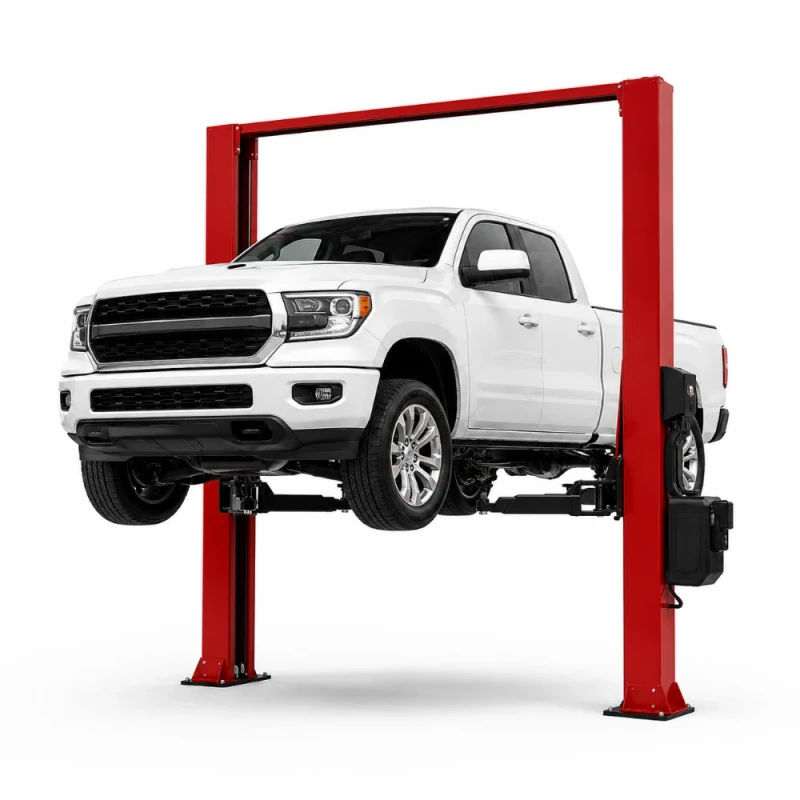
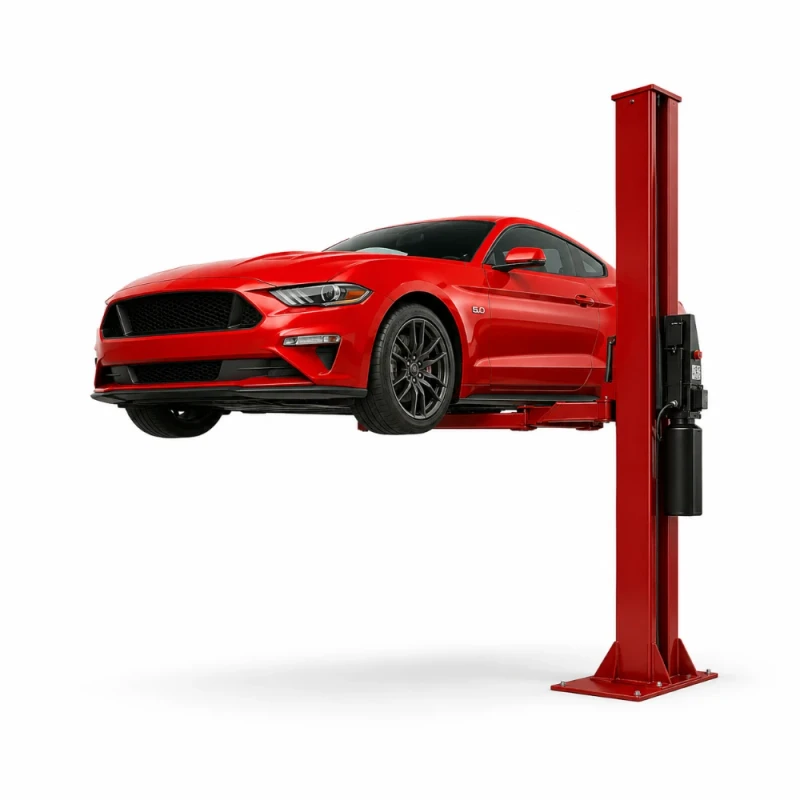
- 2-Post Lifts: from around $1,299 for base models to $7,000 for heavy-duty certified units
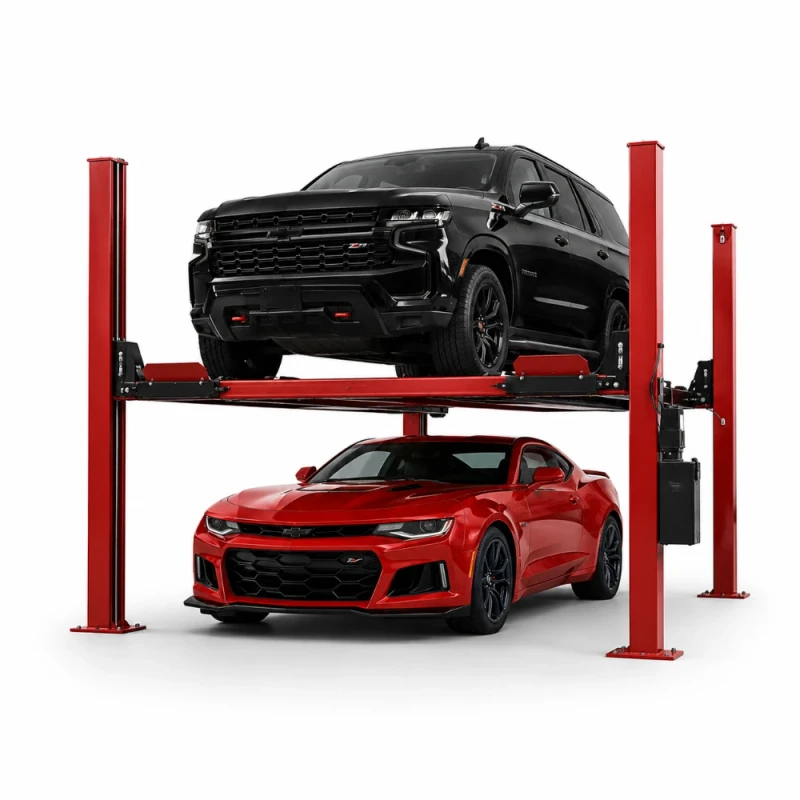
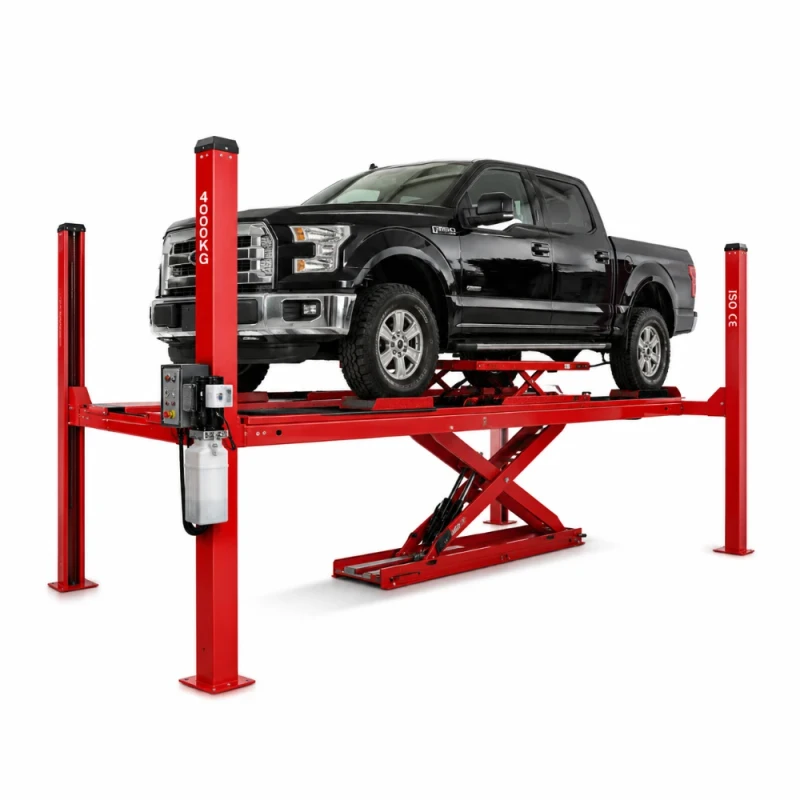
- 4-Post Lifts: $3,000-$8,000 (ALI-certified models available)
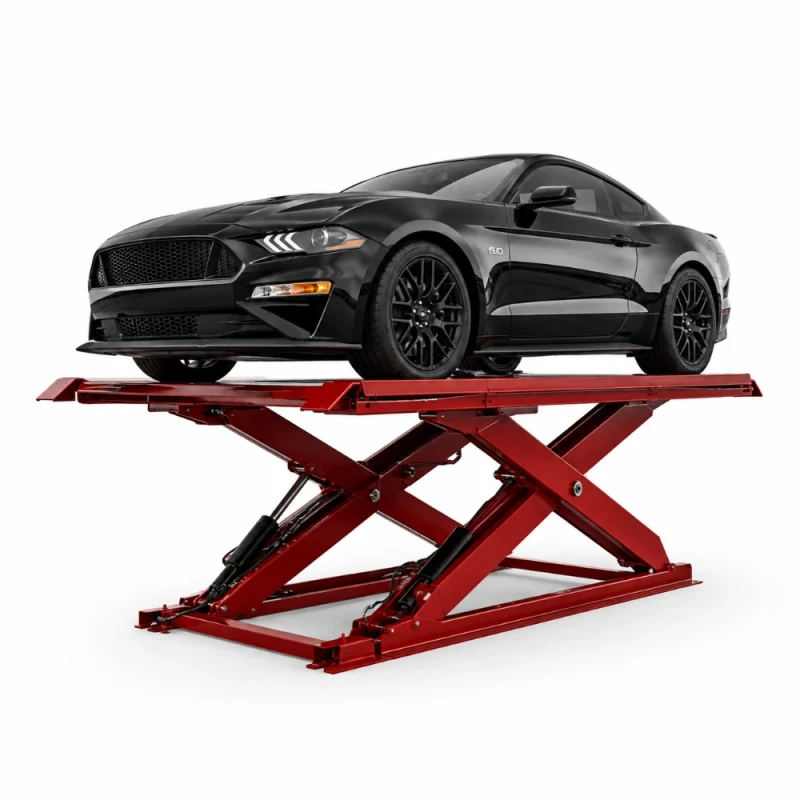
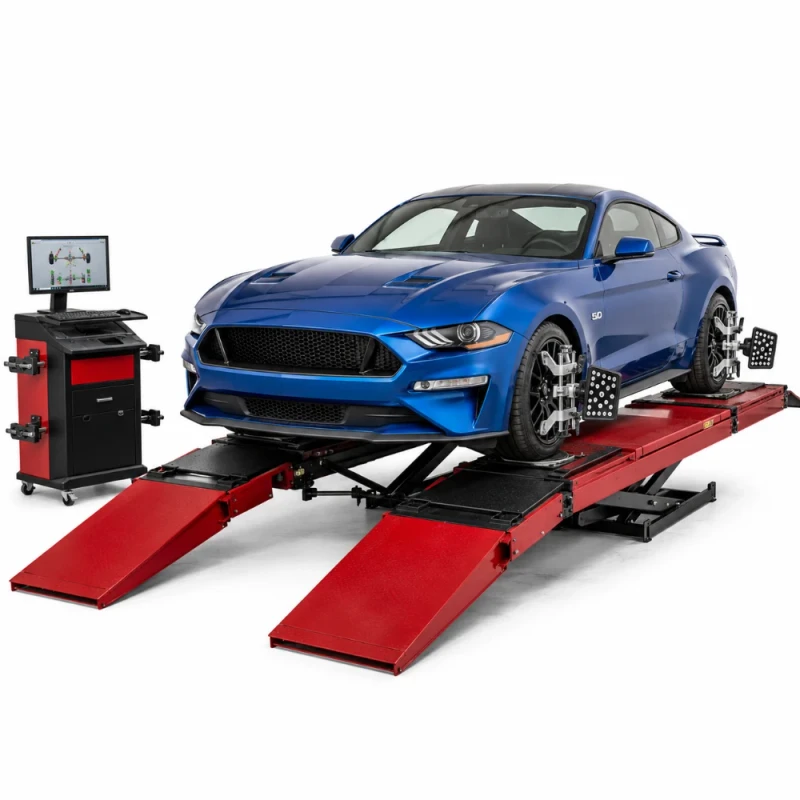
- Scissor Lifts: $3,500-$9,000 (ALI-certified models available)
Every model includes free shipping from our 3 US hubs – Bakersfield CA, Wenatchee WA, and Fargo ND – with 2-5 business day delivery and liftgate service included for residential addresses. See our distribution centers page for transit times.
Common ALI Certification Myths
Myth 1: "All lifts are basically the same."
Fact: Non-ALI lifts may use thinner steel, skip safety features, and fail prematurely. The certification process exists precisely because they are not all the same.
Myth 2: "ALI certification is just marketing."
Fact: ALI is the only ANSI-accredited certification body for automotive lifts, and its process includes independent testing, factory audits, and field inspections – the opposite of a marketing label.
Myth 3: "I can save money buying non-certified."
Fact: A $200-$500 up-front saving isn't worth a voided warranty, a denied insurance claim, or a safety failure. The cheap lift is usually the most expensive one you can buy.
Myth 4: "Import lifts are just as good."
Fact: Many imports claim to "meet ALI standards" without actually being certified. Only ALI certification provides independent verification – "meets" is not "certified."
Myth 5: "ALI certification is only for commercial shops."
Fact: Home garage owners need it too – for safety, warranty, insurance, and resale value. A dropped car in a home garage is just as dangerous as one in a shop.
Frequently Asked Questions
Is ALI certification required by law?
Not federally, but some states require it for commercial use, OSHA references ALI standards, and most insurance policies require certified equipment. Treat it as effectively required for any serious install.
How much more does ALI certification cost?
Typically $200-$500 more than a non-certified lift. For that you get independent safety testing, warranty protection, and insurance acceptance – easily worth it on a $3,000-$10,000 purchase.
Can I get ALI certification after purchase?
No. Certification is awarded to the manufacturer before sale; you cannot certify a non-certified lift after you buy it. Choose a certified lift from the start.
Do all AutoHoistPro lifts have ALI certification?
Many of our lifts are ALI/ALCTV certified – look for the certification on each product listing, or call us and we will confirm a specific model. All orders include free shipping from our 3 US hubs with delivery in 2-5 business days after dispatch.
How do I know if my lift is ALI-certified?
Check for the ALI label on the lift, verify it in the ALI database at autolift.org, or contact the manufacturer. If it's not in the database, it's not certified.
What happens if I buy a non-ALI certified lift?
You risk safety hazards, a voided warranty, denied insurance, and potential liability. Always buy ALI-certified – it's the one spec that protects everything else.
ALI Certification and Your Total Cost
A common question is whether ALI certification changes the real cost of ownership – and the honest answer is that it lowers it. A certified lift costs $200-$500 more up front than a non-certified equivalent, but that premium buys a warranty that will actually pay out, insurance that will actually cover you, and a lift that will actually last, which together make it cheaper over even two years of ownership. AutoHoistPro keeps that premium small by selling direct from manufacturer-authorized inventory, and every certified lift ships with free shipping from our 3 US hubs so the freight doesn't quietly erase the value. When you compare a $3,400 certified 2-post from us (with free shipping) against a $3,000 uncertified import plus $600 freight, the certified lift is both safer and cheaper out the door – and it stays cheaper the day a hose fails and the warranty covers the part instead of leaving you to buy one. Budget for the certified price, factor in installation (a weekend DIY or $500-$800 for a pro) and a 220V circuit ($200-$500 if needed), and treat the certification as the line item that protects every other dollar you spend. The cheapest lift you can buy is rarely the least expensive lift you can own, and ALI certification is the spec that turns that saying into a number on your receipt – usually in your favor.
Conclusion
ALI certification is the one car lift spec that protects everything else – your safety, your warranty, your insurance coverage, and your resale value. It's the only ANSI-accredited, independent verification that a lift was designed, built, and inspected to the ANSI/ALI ALCTV standard, and the $200-$500 it adds to the price is the cheapest insurance you'll ever buy on a $3,000-$10,000 piece of equipment. AutoHoistPro carries ALI-certified models – look for the certification on each listing, or call us to confirm a specific model – and every order ships with free shipping from our 3 US hubs. Shop ALI-certified 2-post lifts with free freight shipping from AutoHoistPro – and buy a lift you can stand under with confidence. That's the whole point of certification, and the whole point of buying from a dealer who tells you plainly which lifts are independently tested and ALI-listed.